
Kitchen Remodeling · The Acreage
Kitchens on Acreage lots come with their own conditions: private wells, septic systems, year-round humidity and long shell rock driveways. Here is how to plan a remodel around all of it.
Homeowners in The Acreage deal with things much of Palm Beach County never thinks about. Private wells. Septic tanks. Shell rock roads that go soft after an afternoon storm. A lot of homes here went up in the 1980s and 1990s, when the area was mostly horse property and nurseries, and their kitchens are showing it. Laminate counters are peeling at the seams. Cabinet bottoms are swollen near the sink. The layout closes the cook off from the family room.
Other homes are newer estates on big parcels, where the owners want a kitchen that matches the scale of the house. Both kinds of projects share the same local conditions, and those conditions should shape the plan before anyone picks a cabinet color.
This post walks through what we look at when we plan kitchen remodeling in The Acreage, and why each item matters.
Most Acreage homes run on well water. Depending on the well, that water can carry iron, sulfur or heavy hardness. You see it as orange staining in a white sink, scale crusted on faucet aerators, and dishwashers that leave a film on glasses.
Before choosing fixtures, we ask about the treatment system. Is there a whole-house softener or iron filter in the garage? Is it working? If the homeowner wants a drinking water system under the sink, we plan cabinet space and a dedicated faucet hole for it now, so nobody is cutting into a new stone top later. Fixture finishes matter too. Some finishes hide mineral spotting far better than others, and we talk through that with you.
Septic is the other half. A garbage disposal sends extra solids to the tank. Some homeowners keep one and pump the tank more often. Others switch to a sink strainer and a compost bin. Either choice is fine. It just needs to be a decision you make on purpose.
The Acreage sits well inland, so salt air is less of a factor here than on the coast. Humidity is another story. It stays high most of the year, and it finds every slow leak.
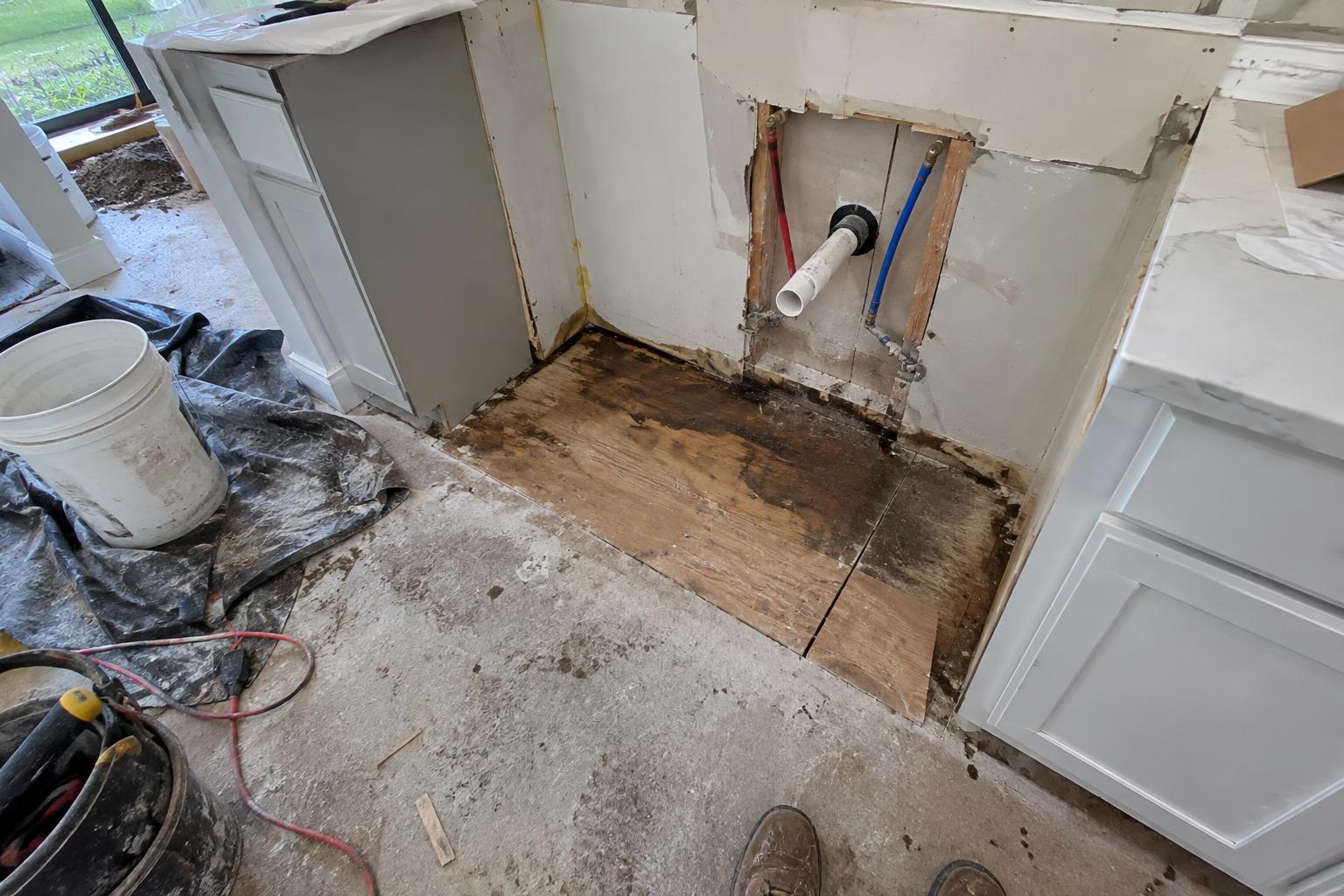
When we pull out an old sink base, we often find the same thing: a dark, soft patch of plywood subfloor where a supply line or drain fitting dripped for years. Sometimes there is mold on the back of the cabinet or the drywall behind it. That section gets cut out and replaced with sound material before anything new goes in. We also swap aging supply lines for new PEX and set a fresh drain connection while the wall is open.
For new cabinetry in this climate, we favor plywood boxes and sealed edges near water. Range hoods should vent to the outside with a backdraft damper. A recirculating hood moves grease and moisture around the room, and in a Florida kitchen that moisture has nowhere to go.
Kitchen work that touches plumbing, electrical or structure needs a Palm Beach County permit. That includes moving a sink to an island, adding circuits or taking out a wall between the kitchen and family room. Removing a bearing wall means a properly sized beam, and that design gets done up front.
Windows deserve their own conversation. If you are enlarging the window over the sink or adding a slider out to the patio, the new opening has to meet Florida Building Code wind requirements for our area. In practice that usually means impact-rated products. We fold that into the kitchen plan so the opening, the framing and the product all line up at inspection.
Electrical is a common surprise in older Acreage homes. Original panels may be short on space for the dedicated circuits a modern kitchen needs. Many families here also run generators during storm season, so it makes sense to think about which kitchen circuits, like the refrigerator, should be on the transfer switch.
This part sounds minor until delivery day. Stone slabs, cabinet pallets and appliances arrive on large trucks. Long driveways, gates, culverts and soft ground after rain all affect how close a truck can get.
We walk the lot during planning and pick a staging spot on firm ground. The dumpster goes where it will stay clear of the septic tank and drain field, since heavy loads over that area can crush lines. During rainy months we schedule big deliveries with the weather in mind, and we protect the driveway and the floors from the front door to the kitchen.
Our process starts with a walkthrough. We measure, look at the layout you have, check the water treatment and the electrical panel, and listen to how your household actually cooks and gathers. Then we put together a design and a written scope.
We order cabinets, appliances and other long-lead items before demolition starts, so the kitchen sits torn out for as short a time as possible. If it helps, we set up a simple temporary kitchen with the refrigerator and a microwave in another room. You can see more about our approach on our Kitchen Remodeling in The Acreage page.
We also handle whole-home remodels and additions, so if the kitchen project grows into opening up the family room or adding square footage, the same team carries it through. Neighbors in Loxahatchee Groves, Westlake and Royal Palm Beach face many of the same rural conditions, and we bring the same planning to each of those homes. Learn more on Our The Acreage Service Area page, or call (561) 562-2318 to set up a walkthrough.
Yes. Iron and hardness in well water can stain sinks and build scale on faucets and dishwashers. We check your treatment system during planning, help you pick fixtures and finishes that hold up to it, and leave room for an under-sink drinking water system if you want one.
Most kitchen remodels that change plumbing, electrical, walls or windows need a Palm Beach County permit. We handle the permit process and schedule inspections as part of the project, including hurricane code requirements for any new or enlarged window or door openings.
We place the dumpster and any heavy delivery trucks on firm ground away from the septic tank and drain field. We also talk with you about disposal use and drain layout so the new kitchen works well with your septic system.
Free assessment and a written estimate from a local crew.
Request a free estimateCall (561) 562-2318